
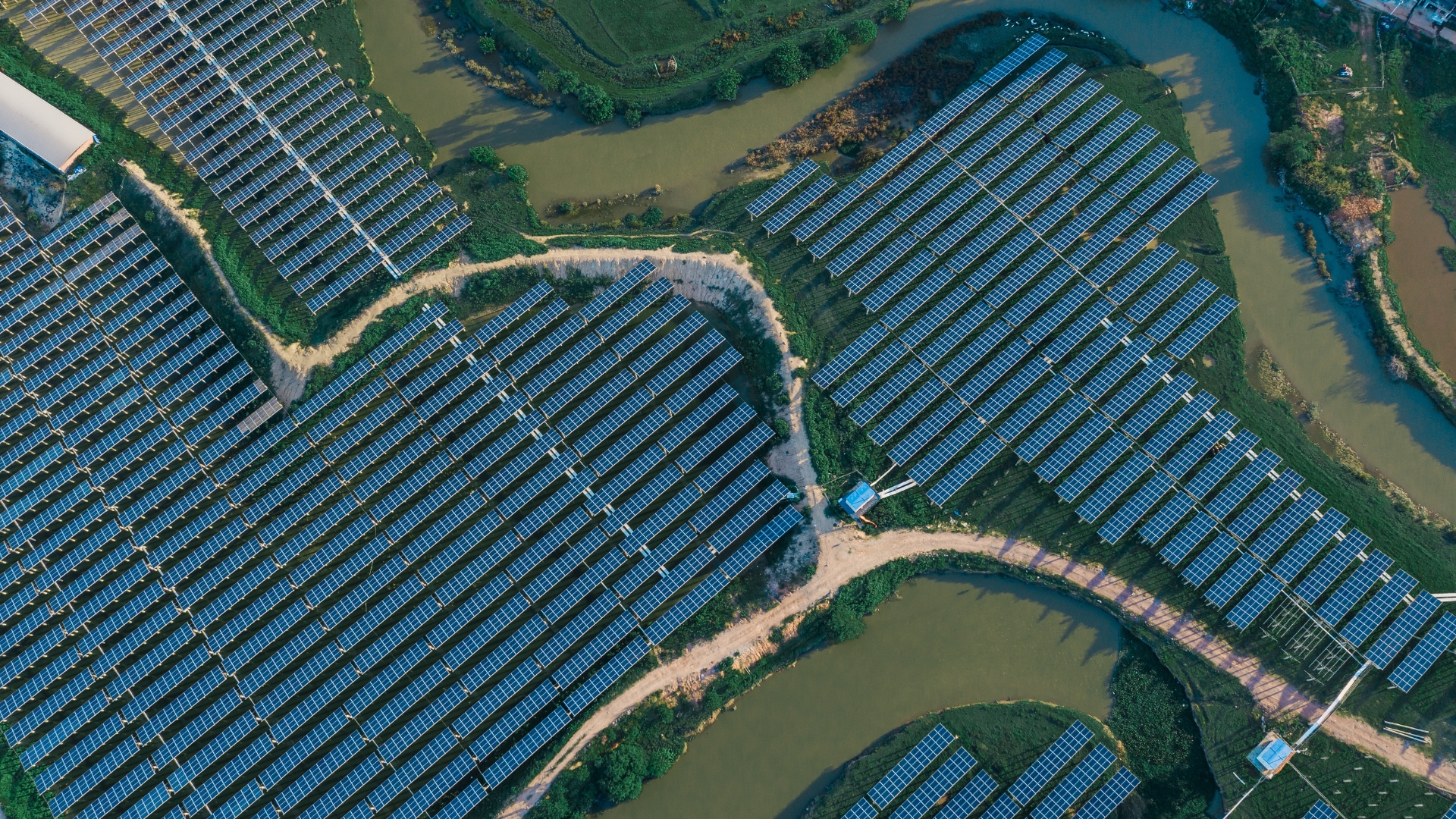







Malaysia’s Ministry of Energy Transition and Water Transformation launched the sixth round of the Large Scale Solar program on July 16, 2026, offering 2,500 megawatts of solar capacity paired with 1,250 megawatts of battery storage. The program is expected to draw between RM13 billion and RM15 billion in private investment while targeting commercial operation for all projects by the end of 2029.
Key Facts At A Glance
- LSS6 offers a total of 2,500 MW of solar capacity integrated with 1,250 MW of Battery Energy Storage Systems (BESS)
- The program is divided into three packages, with 450 MW total reserved for Bumiputera companies
- Package 1: 2,200 MW solar plus 1,100 MW BESS, open to all eligible developers
- Package 2: 300 MW solar plus 150 MW BESS, reserved for Bumiputera developers
- Package 3: 150 MW solar with no storage requirement, for smaller Bumiputera companies
- Bid sizes range from 60 MW to 500 MW for Packages 1 and 2, and 10 MW to 30 MW for Package 3
- RFP documents for Packages 1 and 2 are available July 27 to August 7, 2026; Package 3 documents follow August 17 to August 28, 2026
- Projected investment: RM13 billion to RM15 billion, with 15,000 to 20,000 jobs during construction
- Estimated annual carbon dioxide reduction of about 2.6 million tonnes
Malaysia’s Ministry of Energy Transition and Water Transformation, known as PETRA, announced on July 16, 2026 that it would implement the sixth round of its Large Scale Solar program (LSS6), extending a bidding mechanism that has run for several previous rounds to expand the country’s utility-scale renewable capacity. The ministry said the program builds on the success of earlier LSS rounds, which it credited with strengthening the domestic solar industry and lowering electricity generation costs through competitive, market-based bidding.
Storage Requirement Marks A Shift From Earlier Rounds
Unlike previous large-scale solar tenders, LSS6 pairs the bulk of its solar allocation with mandatory battery storage. Of the 2,500 MW total quota, 1,250 MW must be matched with BESS capacity, according to the ministry’s announcement. The pairing reflects a broader push by Malaysian authorities to address grid-stability concerns as intermittent solar generation expands, particularly as data-centre-driven electricity demand grows in southern Peninsular Malaysia.
Three-Package Structure Targets Local Industry Participation
The program is structured into three distinct packages. Package 1, open to all eligible developers, accounts for the largest share at 2,200 MW of solar paired with 1,100 MW of BESS. Package 2 reserves 300 MW of solar and 150 MW of BESS exclusively for Bumiputera-owned developers, while Package 3 sets aside 150 MW of solar capacity without a storage requirement for smaller Bumiputera companies. In total, 450 MW of solar capacity is earmarked for Bumiputera participation across Packages 2 and 3.
Bid sizes differ by package: developers under Packages 1 and 2 may bid for projects between 60 MW and 500 MW, while Package 3 permits smaller bids of 10 MW to 30 MW. The ministry said developers must demonstrate prior experience in solar project development, though experience with battery storage projects is not a mandatory requirement. Preference will reportedly be given to projects using locally manufactured solar photovoltaic modules, with development prioritized in high-demand areas of southern Peninsular Malaysia to support transmission and grid performance in that region.
Investment And Timeline
The ministry projects that LSS6 will attract RM13 billion to RM15 billion in private investment and generate 15,000 to 20,000 jobs during the construction and development phases. Package 3 alone is estimated to represent close to RM500 million in investment opportunities for smaller Bumiputera businesses. Request for Proposal documents for Packages 1 and 2 will be released from July 27 to August 7, 2026, with Package 3 documents following from August 17 to August 28, 2026. Selected projects are expected to begin commercial operations in stages, with all projects targeted for completion by December 31, 2029.
The ministry estimated the program would reduce carbon dioxide emissions by approximately 2.6 million tonnes annually once fully operational, supporting Malaysia’s broader low-carbon transition and sustainable development commitments.