
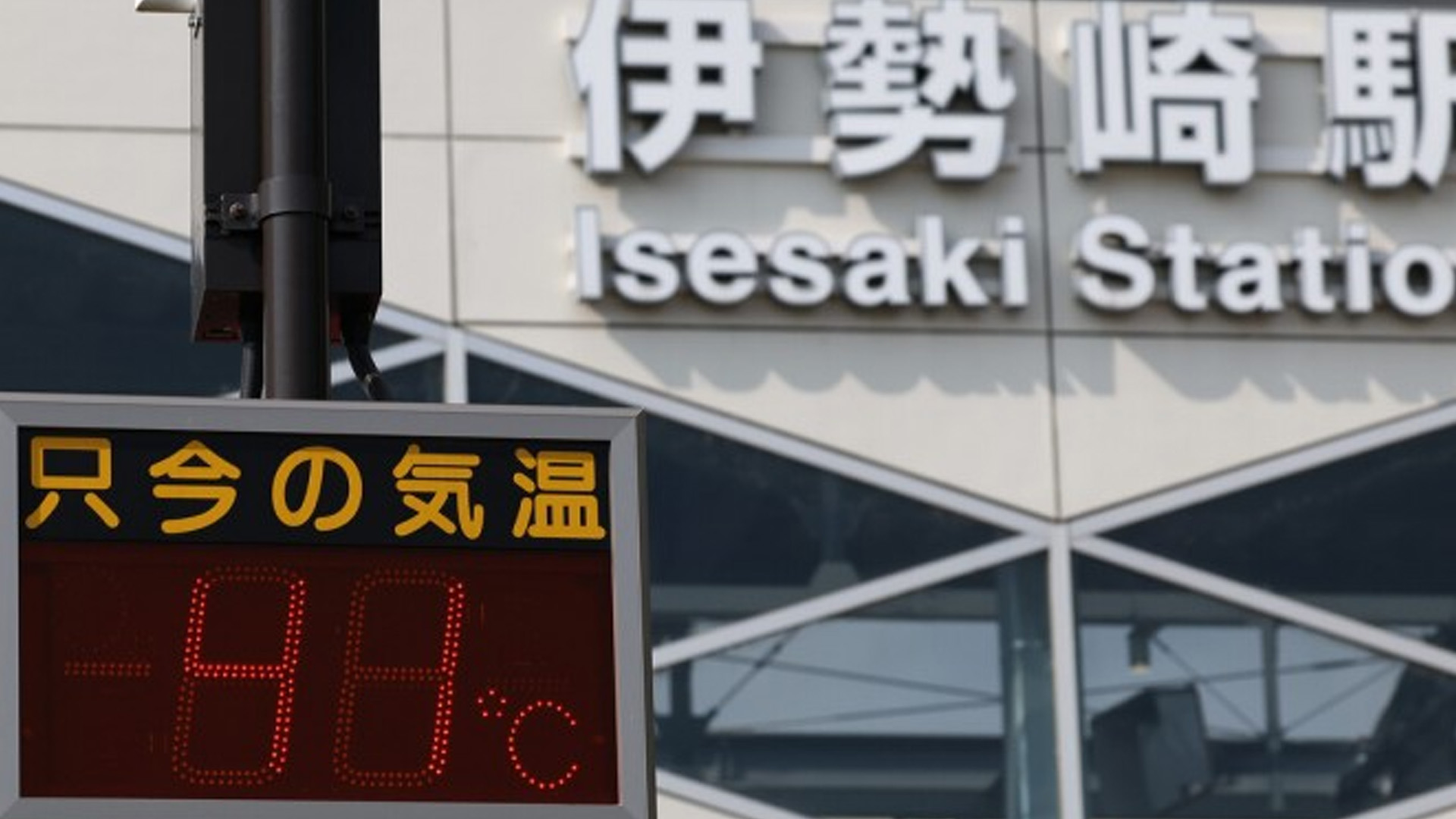







The temperature in the eastern Japan city of Isesaki, Gunma Prefecture, soared to 41.8 degrees Celsius at 2:26 p.m. on Tuesday, marking a record high for Japan, the Japan Meteorological Agency said.
The previous record high was 41.2 degrees, marked in the western city of Tamba, Hyogo Prefecture, last July 30.
On Tuesday, temperatures of 40.0 degrees or higher were recorded at a total of 14 locations across five of Japan’s 47 prefectures, the highest single-day total since records began.
Temperatures rose to as high as 41.4 degrees in Hatoyama in Saitama Prefecture, north of Tokyo, 41.2 degrees in Kiryu in Gunma, and 41.0 degrees in Maebashi, also in Gunma.
This summer, the Japanese archipelago is covered with a double layer of the Pacific anticyclone and the Tibetan high-pressure system, resulting in sunny and extremely hot days in many areas.
Isesaki has experienced nearly continuous days of 35 degrees or higher since July 20.
Tuesday marked the sixth day this summer with temperatures hitting 40 degrees or higher nationwide. Heatstroke alerts were issued in almost all prefectures.
The agency calls on people to use air conditioners and limit outdoor activities during daytime to prevent heatstroke. (PNA)