
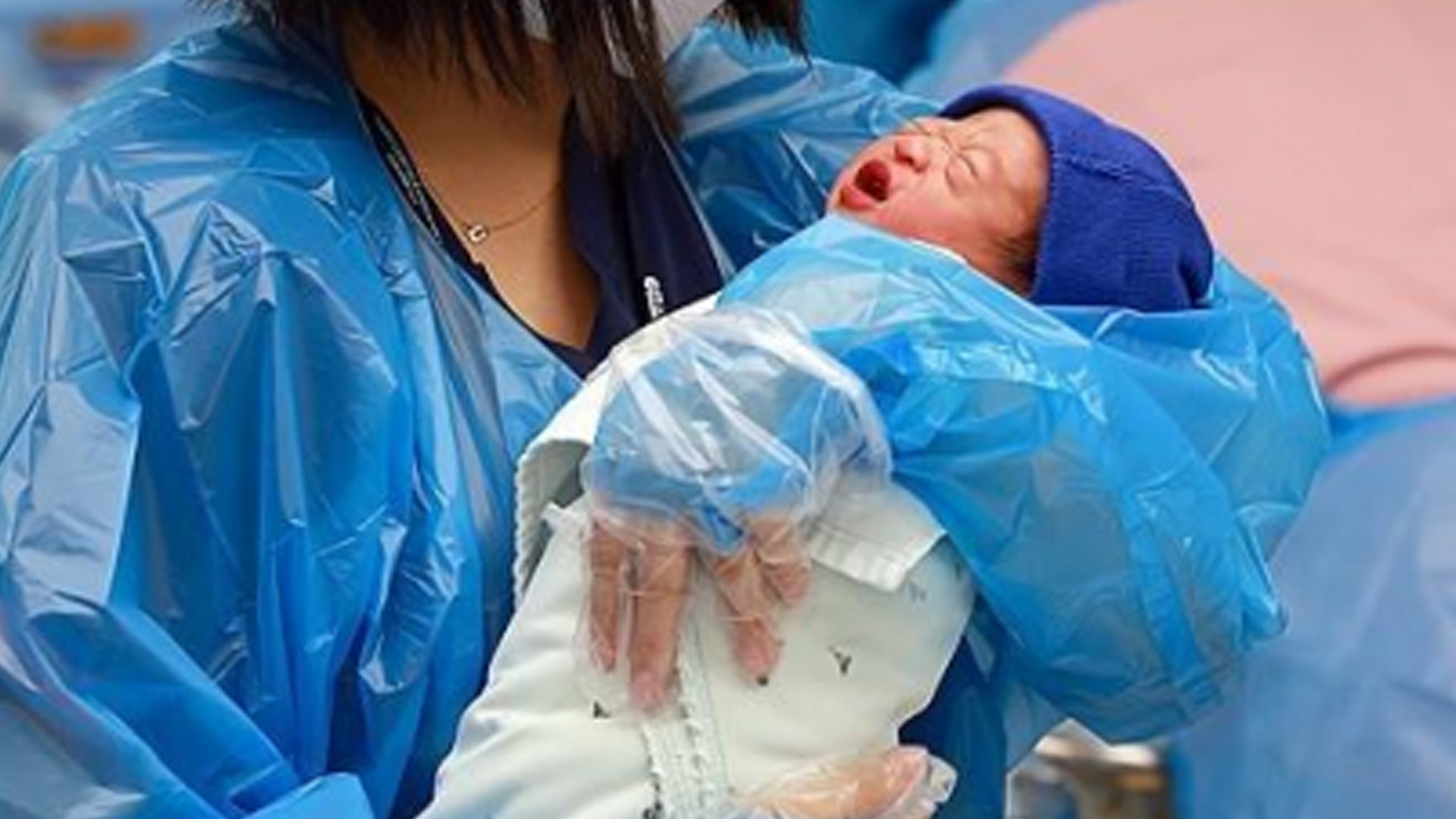







South Korea recorded its fastest rise in newborns on record in June, government data showed Wednesday, offering a rare boost for a nation long challenged by one of the world’s lowest birth rates.
A total of 19,953 babies were born in June, up 9.4 percent from a year earlier, according to data compiled by Statistics Korea.
It marked the steepest on-year increase for any June since 1981 when the agency began compiling relevant data.
June also marked the 12th consecutive month of on-year growth, though the monthly number of newborns fell below the 20,000 mark for the first time in three months.
The country’s total fertility rate, the average number of children a woman is expected to have in her lifetime, went up by 0.06 from a year earlier to 0.76 in June on the back of increased childbirths among women aged 35-39.
In the second quarter, the number of newborns rose 7.3 percent on-year to 60,979, also marking the highest growth rate for any second quarter since 1981.
During the first half of 2025, South Korea recorded a 7.4 percent rise in births compared to a year earlier, the highest first-half growth rate on record, the data showed.
“The uptrend was attributable to a continued rise in marriages since the first quarter of last year, an increase in the population of women in their 30s and a more positive perception of childbirth, among other factors,” agency official Park Hyun-jeong said. (PNA)